‘The Prom’: Message of Belonging a Great Fit for Windward
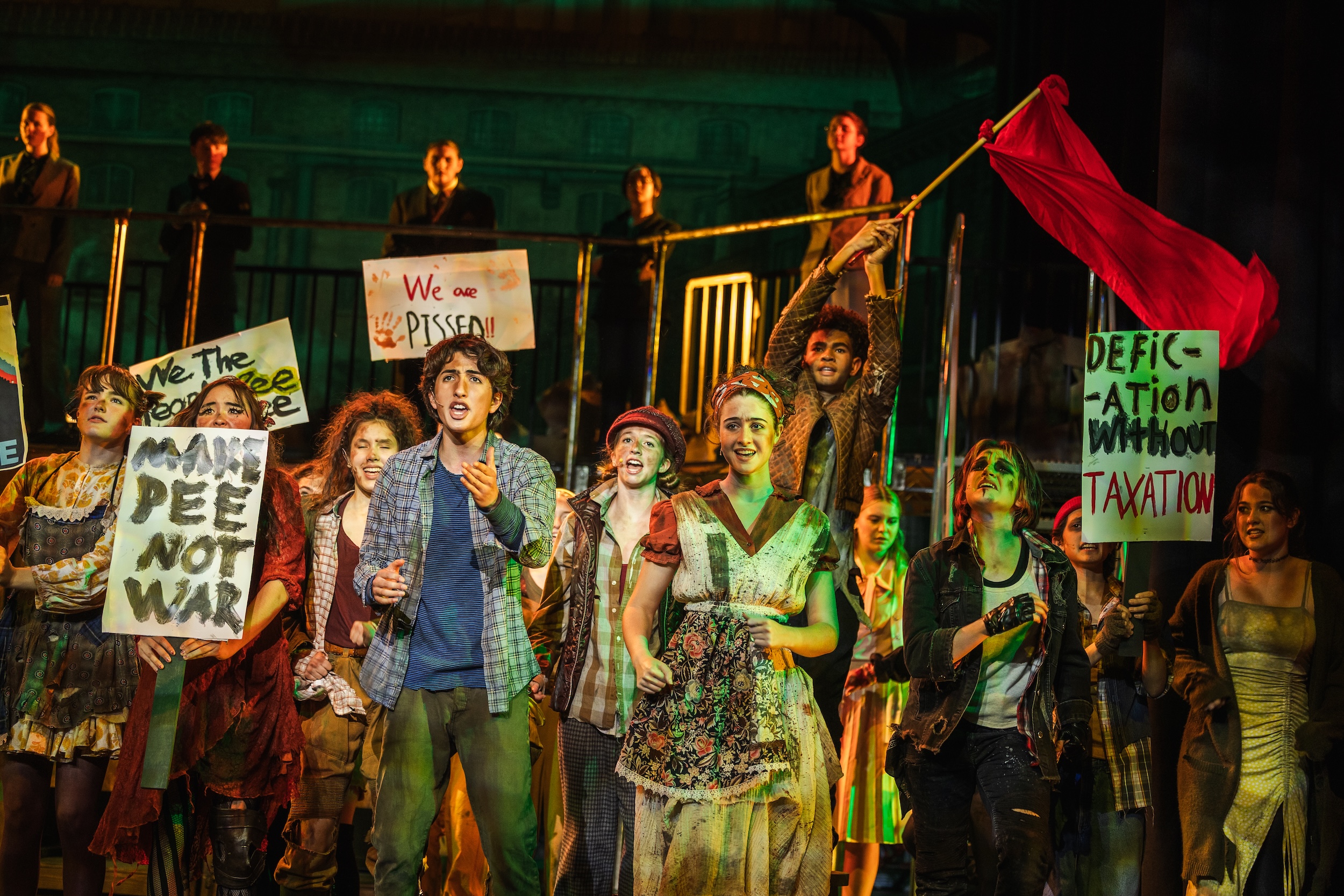
In sold-out dress rehearsals and shows on December 6-9, Windward performers in “The Prom” told a story of love, acceptance, and belonging on the stage. Although numbers like ‘The Acceptance Song’ or ‘Time To Dance’ brought an air of humor and vibrance to the theater, at the heart of the musical was a compelling message about creating the space to exist proudly as one is, regardless of others’ response.
Set in Edgewater, Indiana, “The Prom” ran on Broadway from 2016 to 2019, before being adapted into a movie on Netflix in 2020. It follows Emma Nolan, a lesbian student who only wants to go to prom with her girlfriend (Alyssa Greene), but is prevented from doing so by PTA president and Alyssa’s mother, Mrs. Greene, as well as a homophobic town. Seeing this news, aging stars Dee Dee Allen, Barry Glickman, Angie Dickinson, and Trent Oliver join forces with the school principal, Anne Hawkins (Tom in the original production) to give Emma the night she deserves.
Director’s notes on the show included the backstory of the musical.

Photo Courtesy of Maggie Goldsmith
“The creators behind Broadway’s ‘The Prom’ formulated the show’s premise after seeing nationwide news reports of incidents involving gay students not being allowed to go to their proms,” the notes read. “The musical was inspired by several occurrences involving exclusion and prejudice with regards to high school proms and homecomings.”
In Windward’s production of “The Prom,” audiences noted a couple of standout numbers.
Firstly, the finale – the inclusive prom hosted for Emma and all the other students, filled with liveliness, was a heartwarming scene which resonated with the audience. But Harper C. mentioned that she admired something different than the acceptance reflected in the finale.
“It didn’t conclude with a perfect ending,” she said as she talked about how common the struggle with identity is. “To wrap up Emma’s story with a neat, perfect ending would feel dismissive and unrealistic.”
For Harper, it was something else that resonated deeply. “Although not everyone ended up supporting Emma, it was an inspiration to keep making change, one person at a time.”
As Emma shares her story on the internet through song, displaying personal pride despite hateful treatment by others, it’s clear just how important this idea is.
In ‘Unruly Heart,’ Emma sings that her heart doesn’t fit the typical mold, while rejecting the hatred and homophobia thrown at her. A screen filled with videos from others who resonated with her journey aided with the idea of belonging promoted by the musical.
Song and dance were particularly crucial forms of expression in the show, remarked music director Daniel Koh, who commented on his experience imbuing meaning into the music.
“I worked closely with the singers,” he explained, “to ensure that we told the story as authentically, as honestly and as vulnerably as possible, and also that the story was told with clarity, so that the people in the audience had a clear understanding of the words and the plot of the show.”
When it came to dance, the musical featured a blend of various types of movement.
“The choreography was really exciting to create,” said James Patrick Moran, who directed and choreographed the show. “There were so many styles of dance in one show from Hip-Hop to Fosse, to contemporary to absurdist literal movement. From 80s jazz to traditional musical theatre dance. In many ways the varying styles of dance represented inclusion of all movement styles. There was something for absolutely everyone.”

Photo Courtesy of Maggie Goldsmith
Visually, Windward added its own unique touches to the production through sets and costuming. “Our vision for the show was this idea of color,” James reflected. A video wall transported audiences to locations in both New York and Indiana, featuring places like Emma’s high school, an Applebee’s, a monster truck rally, and even Broadway.
The costumes of the show also told a story.
The ‘Broadways’ – Dee Dee, Barry, Angie, and Trent, wore sparkles and colors that popped out to represent their big personalities. Students, teachers, and parents in Indiana who chose to shun Emma because she was lesbian were clothed in dull tones that displayed the bland, sad nature of such a world.
“In Edgewater, Indiana, the colors of the costumes and lighting were void of the vibrancy of, say, the New York setting where acceptance is in the forefront,” said Moran. “As Emma grows closer to full acceptance from her community the colors build like a beautiful puzzle of acceptance and inclusion. When she finally gets to kiss Alyssa at the prom, in public the color story is completed and we are living in TECHNICOLOR!”
To the young actors in the production, acting teachers and directors Moran and Jordan Fox emphasized the sense of belonging above all, helping students connect even further to the message. They explained that schools in other states had been banned from putting on productions of “The Prom” because of its content, which only demonstrated its prevalent nature and importance.
For people like Francesca C., who played Mrs. Greene, the main antagonist of the story and the representation of oppressive views, it wasn’t just a musical, but a call for necessary change.
“Mrs. Greene is incredibly complicated,” she said. “She’s flawed, she’s in denial, and I believe her upbringing sheltered her to believe certain things and think certain ways about queerness. I believe she’s not used to change, and she sees her daughter’s sexuality as something ‘new’ and ‘different.’ But people can grow, she made sure to mention along with one particularly impactful quote, where Francesca’s on-stage daughter, Alyssa, proclaimed, ‘Things are different now, and they’re better because of people like [Emma].'”
“Although much of the show was filled with humor and ridiculousness,” Francesca said, “beneath it was the very real battle of a young girl who only wanted to be accepted as she was, and a conclusion that inspired hope.”
Photo Courtesy of Maggie Goldsmith
These ideas and emotions infused themselves into character and cast relationships as well, said Joel M., who played Trent.
“What made ‘The Prom’ so special was getting to know the cast, crew, and performing the show we worked on for a good while,” he said. “I think the performances themselves really elevated how we all felt about the show.”
The months of rehearsals brought with them a closeness like no other. At the end of the final show, Lauren W., who performed as Emma, told the audience that their musical was about “finding your home,” and the cast had found that in each other, bringing another meaningful layer to the core values of “The Prom.”
The enthusiasm between performances and emotional conclusion to the show only confirmed that.
Francesca described it as “bittersweet,” for a senior like her, though “the energy of the cast was very familial and encouraging.”
As for preparation, Joel explained that to get to know their characters, the cast was able to infuse their own abilities and talents.
“Even though Trent is written as more of an actor than a dancer, I infused my dancer side into the character because I had multiple parts where I had to show that in choreography,” he noted while also acknowledging the exaggerated movements that made this work.
Directors inspired their actors to draw parallels and amplify them so the musical felt real and true. In particular, an “as if,” exercise was mentioned. If an actor couldn’t draw from a personal experience, they attempted to react realistically given the set of circumstances.
The strong connections actors formed to “The Prom” through acting, song, and dance clearly made an impact on the audience if the standing ovations each night were any indication.
But the goal of the show wasn’t applause, but to bring awareness to the exclusion members of the LGBTQ+ community face, to promote the values of DEIB that are ingrained within Windward, and to share love.
We are able to change and to make the world a better place for all, including those like Emma—something “The Prom” serves as a touching reminder of.
About the Author: Sydney Litt


Stay up-to-date!
Get the latest Windward stories sent straight to your email.